Philippines payment gateway PayMongo gets $31M Series B, will explore regional expansion

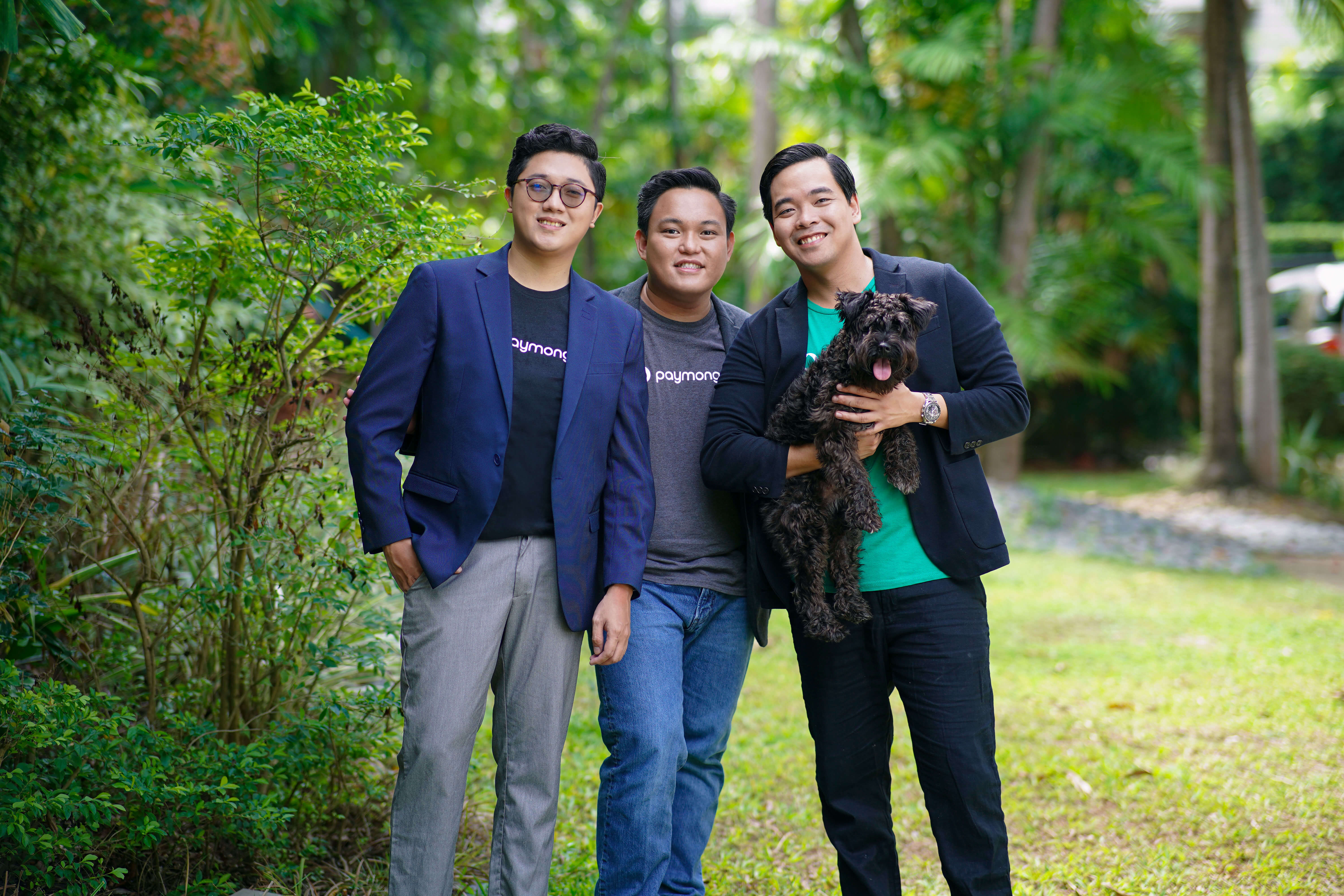
PayMongo founders (from left to right): Jaime Hing III, Chief Technology Officer, Francis Plaza, Chief Executive Officer and Luis Sia, Chief Commercial Officer

PayMongo founders (from left to right): Jaime Hing III, Chief Technology Officer, Francis Plaza, Chief Executive Officer and Luis Sia, Chief Commercial Officer

Philippines-based fintech PayMongo, which enables merchants to accept digital payments, announced today it has raised $31 million in Series B funding with an eye on regional expansion. Investors include Justin Mateen’s JAM Fund, ICCP-SBI Venture Partners and Lisa Gokongwei’s Kaya Founders, along with returning investors Global Founders Capital and SOMA Capital. The startup says the round also included founders from European fintechs like Qonta, Viva Wallet, Billie and Scalable.

This brings PayMongo’s total funding to just under $46 million. Its last funding was a $12 million Series A announced in 2020 and led by Stripe.

The company works with businesses of all sizes, but targets micro-, small- and medium-sized businesses in particular, enabling them to accept different forms of payments, including credit cards, online wallets and over-the-counter. Its products include PayMongo API and e-commerce plugins. The new funding will be used to further develop PayMongo’s current payments infrastructure and add more financial services, including disbursements, capital lending, BNPL, and subscriptions and recurring payments.

Part of PayMongo’s product roadmap includes acquiring new licenses that will allow it to operate more financial services. At the same time, the company is also exploring regional expansion.

“There is so much more work to do in the Philippines. We also forecast more than doubling our team size to support this increasing demand and deliver on our aggressive product roadmap. In parallel, we have started some initial exploration and leg work to expand in the SE Asia region, a work we have kicked off last year,” co-founder and CEO Francis Plaza told TechCrunch in an email.

Other digital payment gateways in the Philippines include DragonPay, PesoPay, PayMaya and Paynamics. Plaza told TechCrunch in an email that the company differentiates itself by its focus on SMBs and high-growth startups and companies since it was founded in 2019.

“Beyond that, as we work with thousands of businesses on the platform, we are geared towards building more products and services that not only enables merchants to easily accept payments but also to grow through access to other financial services,” he said. “From the ability to move money, store balances, access to credit and other expanded payment options for customers.” Plaza added that it is already testing out several new products and services in beta with merchants.

In a statement, Justin Mateen, the founder of Tinder and JAM Fund, said “As one of PayMongo’s first investors, I’ve seen their path from simplifying payments for a handful of businesses to now being a company that thousands of merchants depend on for their day-to-day operations. I’m excited by their progress and thrilled to support the team once again as they generate greater economic opportunities through the digital economy.”


from TechCrunch https://ift.tt/oRtcMOb
via IFTTT

Comments

Popular posts from this blog

This Week in Apps: Microsoft’s app store principles, TikTok’s new safety policies, Apple reveals ‘Tap to Pay’

Welcome back to This Week in Apps, the weekly TechCrunch series that recaps the latest in mobile OS news, mobile applications and the overall app economy. The app industry continues to grow, with a record number of downloads and consumer spending across both the iOS and Google Play stores combined in 2021, according to the latest year-end reports . App Annie says global spending across iOS, Google Play and third-party Android app stores in China grew 19% in 2021 to reach $170 billion. Downloads of apps also grew by 5%, reaching 230 billion in 2021, and mobile ad spend grew 23% year-over-year to reach $295 billion. In addition, consumers are spending more time in apps than ever before — even topping the time they spend watching TV, in some cases. The average American watches 3.1 hours of TV per day, for example, but in 2021, they spent 4.1 hours on their mobile device. And they’re not even the world’s heaviest mobile users. In markets like Brazil, Indonesia and South Korea, users...

Fetch raises $3.5M for its self-service truck rental marketplace

Once upon a time, I had a truck. I loved that truck! I didn’t actually use the truck as a truck all that often, so eventually I sold it and bought something more in tune with my daily needs. Something more “practical,” I suppose. I still miss that truck. Now the few times a year I do need to use a truck as a truck, I’ve gotta convince a buddy to let me borrow theirs for the 34th time or try to nab a rental at the big box hardware store. Hope one is available by the time I get there, wait in line, fill out the paper work, run out to my car because I forgot my insurance card, get back in line, yadda yadda. Fetch , a company we first wrote about a few years ago , makes the process a bit easier: find a truck (or van!) nearby, reserve it through the app, walk up and unlock it from your phone, and be on your way. This week the team is announcing that it has raised $3.5 million to help expand their team and operations. To make Fetch happen, you could say. Fetch is up and running in a ha...

Twitter’s EU-only geoblocks of Russia Today off to a shaky start

Twitter has claimed it’s complying with an EU-wide ban on Russia Today (RT) and Sputnik which came into force yesterday as part of the package of sanctions imposed by the bloc on Russia following the invasion of Ukraine, albeit reluctantly. In a statement the social network has been circulating in response to press requests this week a Twitter spokesperson said: The European Union (EU) sanctions will legally require us to withhold certain content in EU member states, and we intend to comply. Our global approach outside of the EU will continue to focus on de-amplifying this type of state-affiliated media content across our service and providing important context through our labels. We continue to advocate for a free and open internet, particularly in times of crisis. However it’s not clear how well Twitter is actually complying with the legal order banning the distribution of RT’s content in the EU. While some users around Europe have reported encountering an “account withheld”...