Welcome to The TechCrunch Exchange, a weekly startups-and-markets newsletter. It’s inspired by the daily TechCrunch+ column where it gets its name. Want it in your inbox every Saturday? Sign up here.
Hello and happy Saturday! Today we’re taking on two topics. The first fits neatly into our usual coverage area. The second not so much. Let’s go!
Not all SPACs are garbage
In the 2021 SPAC rush I missed the public debut of Alight Solutions. Based outside of Chicago, the company is a business process outsourcing shop that supports tens of millions of employees in the United States. It combined with Foley Trasimene, a blank-check company, last July after announcing its intentions to list via the SPAC earlier in 2021.
It also reported earnings this week, and I chatted with its CEO Stephan Scholl after the fact. There are three things that matter from the Alight report that I want to noodle on with you. In order:
- Not all SPACs are a mess: Today Alight Solutions is worth about $4.7 billion, and is trading a fraction above its pre-combination $10 per share price. That means that the company’s SPAC deal was valued pretty well, and that it is possible to take a company public using the method and not have it eat its own shorts in the following weeks, months and quarters. SoFi was, previously, our leading example of a SPAC combo that failed to flounder; we can add another name to the list.
- Some SPAC projections bear out: In its investor deck from its combination announcement from last January, Alight said that it expected to generate $363 million in BPaaS revenues in 2021. BPaaS stands for Business Process as a Service, and is the company’s SaaS-y service that is its fastest-growing revenue segment. In 2021, however, the company actually saw $390 million in BPaaS revenues. It beat on a key metric! That’s why the company is above water, I reckon.
- The idea of profitable growth: Why is it considered bad news in some circles if a tech company starts to pay a dividend? One line of thinking is that the choice to return cash to shareholders via regular disbursements is an indication that the company in question is out of places to deploy funds, which implies slower future growth. So we tend to see tech companies that aren’t goliaths simply grow like hell even at the expense of profits. Alight appears to sit between the two extremes, focusing on what Scholl described as profitable growth to TechCrunch. This, he explained, ensures that his company doesn’t “over-rotate” on any particular effort, and isn’t burning its ships on its BPaaS strategy; if it doesn’t work out long-term, the company will survive. Alight is rather profitable, so he’s speaking from a position of black ink, for reference. Still, it was interesting to talk to a company that has much in line with tech companies going through a software transition, but with a very different approach to balancing growth and profits. Interesting.
And now, something different.
Teamwork
I am writing to you, as I do every week, on Friday afternoon. I type up this little missive, contribute to Daily Crunch, and then bounce into the weekend.
This Friday, however, has been a grinder. Not only because of economic uncertainty, the pandemic, or the invasion of Ukraine, but also because Chris Gates is leaving TechCrunch for a new role elsewhere. You probably don’t know Chris, which is evidence that I haven’t done enough along the way to shout him out.
Regardless, he was a founding member of the Equity podcast, and his last day was today. By the time you read this, he will be gone. We worked together for around a half decade, recording hundreds of shows, suffering from failures, celebrating wins and generally making the show work as a team. Through host changes, the sale of our parent company, and so very much more, he was there, steady, warm and ready to fucking go. It goes without saying that Equity is also Grace and Mary Ann and Natasha, and has also had the pleasure of having Danny and Kate and Matthew and Katie and Connie in the mix during its life. It is very much a group project.
I’m going to miss working with Chris so much. But his exit is a good reminder of the very human force-multiplier called teamwork.
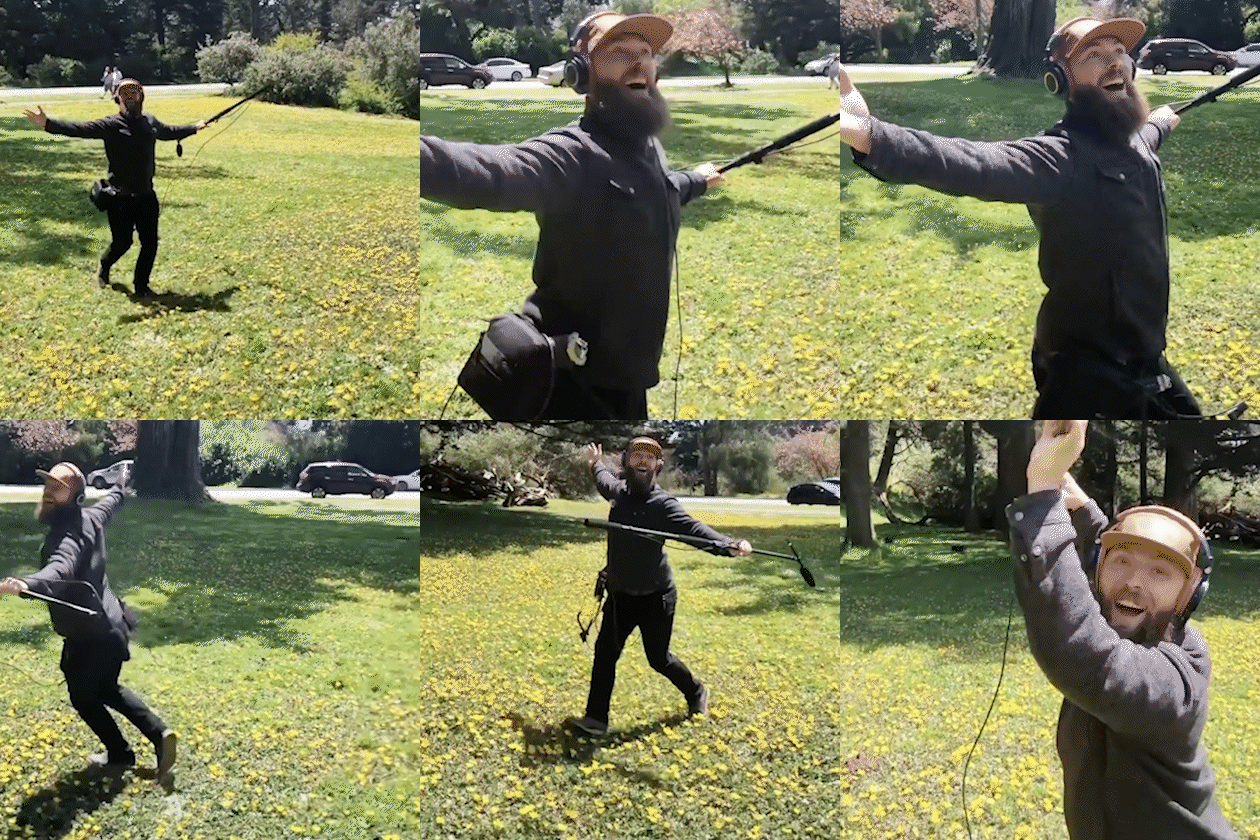
The man, the myth, the smile. Chris posted this to Slack when he announced his exit, so it’s only fair to troll him with it here. This is the energy he brought every single day.
This newsletter, for example, gets written by myself. Then Annie or Richard give it a read. Henry often peeks at it, as well, as he helped dream it up with me a few years back and supported its birth. Finally, it’s moved into our email software, into a slot that our sales team prepares to include the correct advertising elements. It then gets sent out to your inbox and posted on the site, which our tech crew makes possible. I just get my name at the top because I wrote the words. But this product is the result of material, longitudinal teamwork.
I’ve had better luck than I have deserved when it comes to teams. The folks I have had the pleasure of working with in my career have, with very few exceptions, been people I have loved having in my life more generally. Chris and I worked on Equity together through weddings, the birth of kids, moves and more. We did life together, you know?
And let me just note that the TechCrunch+ team, which is where The Exchange lives generally, is aces. Walter and Annie and Ram and Anna and the rest of the team are excellent folks I am lucky to orbit around. I get to do so much more because we work together. And I hope I am returning the favor.
Teamwork. It’s the best. And it makes work breakups all the harder.
Godspeed, Chris, in your next adventure. I look forward to being your #1 fan in whatever it is you’re cooking up next.
— Alex
from TechCrunch https://ift.tt/L2jpK8N
via IFTTT
Comments
Post a Comment